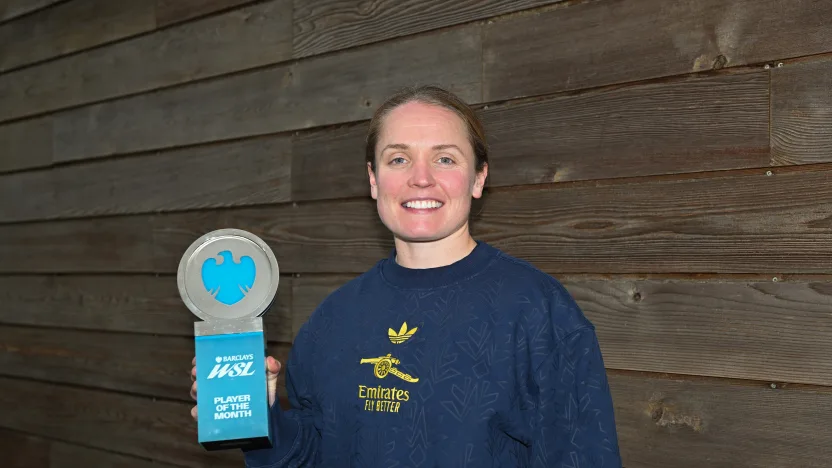
Kim Little: The Midfield Icon Who Refuses to Slow Down
At 35, Kim Little remained one of the most influential figures in the Barclays Women’s Super League, a player whose career had spanned eras and helped define the competition itself. More than just a midfielder, Little had become a touchstone, not only for Arsenal but for the entire league, embodying resilience, intelligence and consistency at the highest level.
From her early breakthrough in Scotland to becoming a central influence in Arsenal’s midfield, Little’s journey combined longevity with excellence. A winner of multiple league titles, FA Cups and League Cups, as well as a UEFA Women’s Champions League trophy with Arsenal and now a FIFA Women’s Champions Cup, her decorated career also included individual accolades such as the PFA Women’s Players’ Player of the Year, an title she claimed early in the WSL’s history.
Yet what made Little remarkable was not just the silverware or the headlines, but her enduring influence match after match, season after season. While many players saw their roles reduced as years advanced, Little’s game evolved: deeper, wiser, more orchestrating, yet always central to Arsenal’s identity.
In a league that continued to grow in quality and competitiveness, Little’s presence served as a reminder that experience and craft were as vital as youthful dynamism. As Arsenal pushed for further titles this season, her continued commitment secured through to 2026, underlined just how much she still had to offer
Last Wednesday evening, Kim Little reached 400 appearances for Arsenal, a milestone that reflected not only longevity, but sustained excellence. Teammates had long spoken about her influence. Leah Williamson described her as “one of the greatest ever to play the game,” a reflection not just of her ability on the ball, but of the way she carried herself within the squad. Former England striker Ellen White once admitted she had “never played with a better player,” highlighting the intelligence and detail Little brought to every phase of play.
Perhaps what defined her captaincy most was her own philosophy. “When you lead, you’re also allowing others to lead too,” she had said a sentiment that captured the culture she helped cultivate at Arsenal. Her leadership was never loud for the sake of it; it was consistent, composed and deeply respected.
Four hundred appearances is a remarkable milestone in any era. To reach it while remaining central to a team competing for the biggest titles in the game made it even more extraordinary. At 35, Kim Little was not simply extending her career, she was still shaping Arsenal’s present, just as she had shaped its modern history.