An in-depth look at how Burnley, Watford and Wolves earned promotion and what each brings to an expanded second tier.
With the Barclays Women’s Super League 2 expanding to 14 teams, Burnley, Watford and Wolves all step into the second tier ahead of the new season. This feature explores how each side earned promotion, their tactical identities, and the key players to watch next season.
Burnley
After winning the FA Women’s National League Northern Premier Division, Burnley will compete in the second tier of women’s football for the first time in the club’s history.
The Clarets’ season combined ambition with adversity. At the start of the 2025–26 campaign, Burnley confirmed their transition into a full-time professional set-up and appointed experienced manager Matt Beard to lead the project.
However, just 68 days into his tenure, Beard stepped down as manager, and days later the club was devastated to learn of his death at the age of 47.
Despite the emotional impact, interim manager Louise Roberts took charge and guided Burnley through an impressive run of form, including a 13–0 win over Blackburn, a perfect November with five wins from five, and a strong FA Cup campaign.
Momentum continued to build into the second half of the season. Roberts was named Manager of the Month before former Burnley player Ross Wallace took over in February and maintained high standards within the squad.
By this point, Burnley had reached 100 goals in all competitions and produced key results, including a crucial 1–0 win over title rivals Wolves in March. Promotion was confirmed on 26 April, when the Clarets sealed the title with a 3–0 win over Stoke City.
Burnley completed the league season unbeaten, recording 20 wins and two draws, scoring 121 goals and conceding just 15.
Attacking midfielder Millie Ravening was the standout performer, finishing as top scorer and consistently delivering in decisive moments. Her movement, finishing and composure made her Burnley’s key attacking threat throughout the campaign.
Another player to watch is Charlie Chadwick, who impressed at just 20 years old with her pace, creativity and ability to both score and create goals, marking her out as a potential breakout player at a higher level.
As Burnley look to establish themselves in the second tier, manager Ross Wallace is expected to continue with a high-tempo 4-3-3 system. The wide forwards stretch the pitch while full-backs push high to support attacks, creating overloads in wide areas and generating a high volume of chances.
Out of possession, Burnley shift into a compact 4-1-4-1 shape, allowing them to protect the back line and win the ball back quickly.

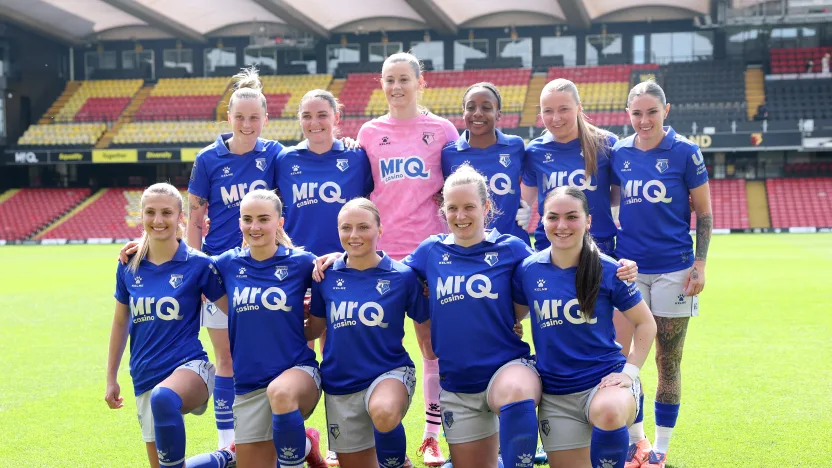
Watford
After winning the FA Women’s National League Southern Premier Division, Watford secured promotion back to the BWSL2 after a two-year spell in the WNL.
Watford’s campaign began with a draw against Lewes before a crucial early victory over title rivals Plymouth Argyle sparked a sustained unbeaten run. Despite a difficult spell in December, including FA Cup elimination and back-to-back league defeats, they responded strongly to finish the season with a nine-match winning streak that ultimately secured the title.
Across the season, Watford combined attacking quality with defensive organisation. They recorded several high-scoring victories, including a 14–0 win over Billericay Town, while also keeping 11 clean sheets in all competitions.
Striker Madison Perry was the standout performer, scoring 25 goals and providing 10 assists to earn Supporters’ Player of the Year. Her movement, creativity and clinical finishing made her Watford’s most consistent attacking threat.
Goalkeeper Sophie Hillyerd also played a key role following an inspiring return from a long-term knee injury, providing stability and confidence during the decisive stages of the title run.
As Watford look to establish themselves in the second tier, manager Renee Hector will continue to deploy a 4-2-3-1 system. In possession, they build through a double pivot in midfield, with three attacking midfielders supporting the striker. The wide players stretch the pitch while full-backs provide additional attacking support.
Out of possession, Watford drop into a compact 4-4-2 shape, allowing them to stay organised, press effectively, and win the ball back quickly before transitioning into attack.
Wolverhampton Wanderers
After a 1–0 victory over Plymouth Argyle in the FA Women’s National League Promotion Play-Off final, Wolverhampton Wanderers secured promotion to the Barclays WSL2 for the first time in the club’s history.
Wolves’ promotion was the culmination of sustained progress across recent seasons, having narrowly missed out on promotion by three points last year and falling just one point short of automatic promotion this time around.
Operating under a hybrid, part-time model, Wolves Women feature several players balancing football alongside other commitments, including Anna Morphet, Amber Hughes and Beth Roberts.
That context makes their achievement even more impressive, having suffered just one league defeat all season, coming against title rivals Burnley.
Goalkeeper Alex Brooks was crucial to their success, producing standout performances throughout the campaign and conceding just 11 goals in 16 matches.
Striker Charlotte Greengrass also delivered in decisive moments, scoring the winning goal in the play-off final and consistently stepping up in key matches across the season.
As Wolves look to establish themselves in the Barclays WSL2, manager Dan McNamara is expected to continue with a high-pressing 4-3-3 system, in line with their aggressive and proactive style of play.