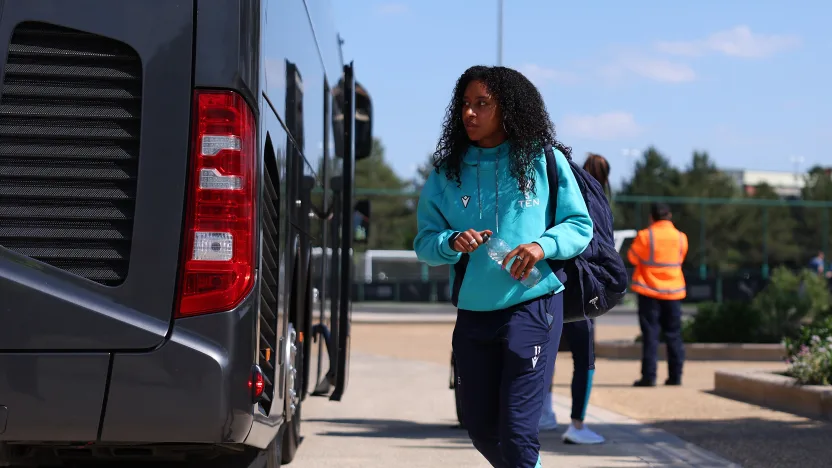
Birmingham City Women have made a statement. The signing of Wilma Leidhammar from IFK Norrköping for a club-record fee shows a club that means business.
The 22-year-old arrived in the Barclays Women’s Super League 2 having spent three seasons establishing herself as one of the most compelling young players in the Damallsvenskan. Her 2025 season brought nine goals and seven assists, and those performances convinced the Blues to bring her to English football.
Leidhammar is an interesting player for a number of reasons, not least because her profile is not straightforward. Comfortable as an attacking midfielder or in central areas, she is the kind of player who resists categorisation. She links play with ease, carries forward efficiently, and arrives in the final third with purpose.
She also captained IFK Norrköping on multiple occasions, which tells us something about how those around her view her, and has represented Sweden at youth levels up to the under-23s.
She plays with passion, always looking to get involved and drive her team forward. These traits can add an extra edge to a Birmingham City side looking to achieve their promotion ambitions.
In this analysis, we look at what her numbers tell us about the player the Blues have brought in, and what she offers in the BWSL 2 and beyond.
Forward momentum
To understand how Leidhammar operates, we need to understand the system she operates within. Birmingham City predominantly play a 4-2-3-1, with Leidhammar deployed as the ten, sitting between the opposition's defensive and midfield lines.
It is a position that demands both intelligence and physicality. Finding the spaces is key, and the young Swede has a unique ability to be in the right place at the right time. Her ability to identify and move into pockets of space between the lines is one of the more distinctive qualities in her game.
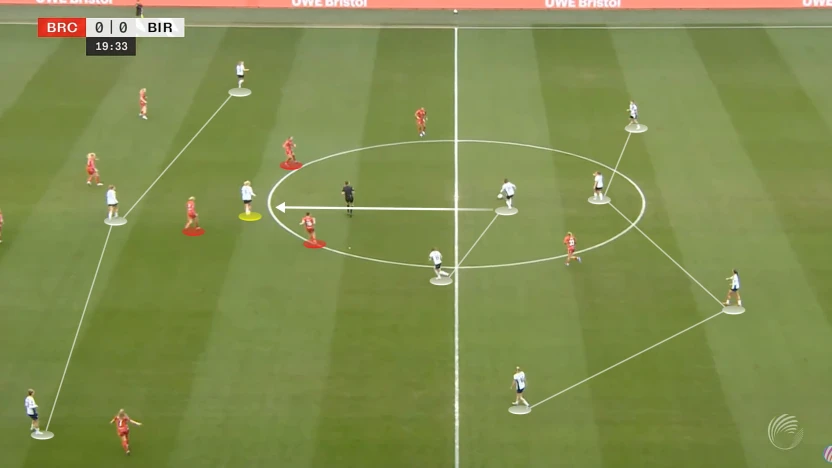
This image is a good example of how Birmingham sets up and the types of spaces Leidhammar identifies during build-up play. We can see her positioned between the Bristol City midfielders, occupying that space between the lines with purpose.
Her movement draws Bristol’s midfielders towards her, and in doing so. Miyagawa finds herself with time and space to receive and play it forward without pressure.
Leidhammar reads the shape of the opposition and shifts her position accordingly, creating angles for teammates and giving herself time on the ball when she receives it. It is a subtle quality, one that does not always show up cleanly in the data but underpins much of what makes her effective when receiving the ball under pressure.

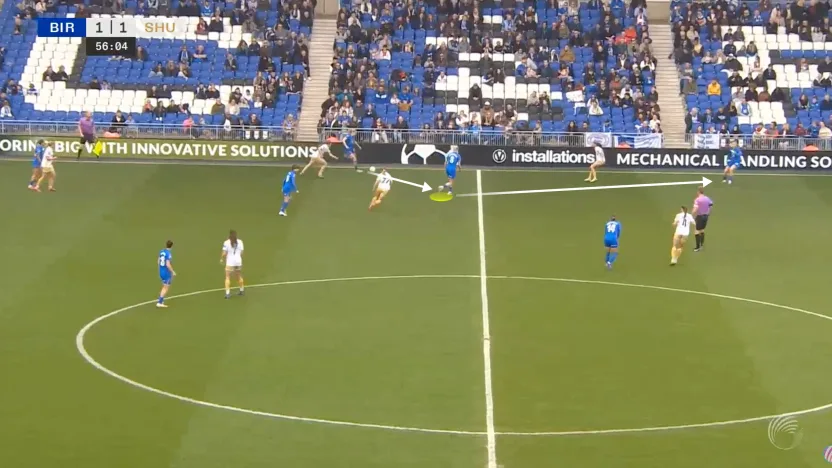
When in possession, Leidhammar is not afraid to run at her opponents, averaging 1.48 dribbles per 90 and 1.48 progressive runs per 90.
Here, we can see her receive the ball in space and drive forward to the edge of the opposition penalty area. Leidhammar is physically imposing for an attacking midfielder, tall and strong enough to hold off challenges, but also agile enough to change direction quickly and exploit the space in front of her.
The combination of physicality and athleticism in a player operating as a ten is another reason the Blues look to build their attacking play around her in the second half of the season.
What the data and the eye test both confirm is a player who is difficult to account for in the final third. She is always capable of finding space between the lines and driving forward with the ball, making her a constant threat to her team's opponents. As Birmingham chase promotion, her presence in the ten position is becoming invaluable to the side.
Linking up
Leidhammar's influence on Birmingham City's play is not limited to her movement and ability to drive at defenders. One of the more underappreciated aspects of her game is her willingness to drop deep and connect play, offering herself as an option and making herself available when her team needs a way out of pressure.

Here, Leidhammar drops deep to receive from a midfielder and, in one movement, lays the ball off to her teammate running forward.
What makes her effective at this is the speed of her decision-making. She does not dwell on the ball; instead, she often executes one-touch passes, quick combinations, and showcases an instinctive understanding of where the next action needs to go.
We can see that her opponent is reluctant to press her aggressively because Leidhammer is capable of both linking up with her teammate and turning and driving forward herself, and that uncertainty gives the Swede just enough time and space to be effective.

Furthermore, what is crucial is that she does not stop there. Having played the pass, Leidhammar immediately spins away from her opponent and makes her way towards the box, ensuring Birmingham maintain their attacking momentum and that she remains a threat in the move she has just started.
The willingness to make forward runs is as important as the pass to set the attack in motion. She forces the opposition defence to track her movement and drop deeper, which in turn creates more space for her teammates to exploit. This is the kind of off-the-ball contribution that doesn’t make headlines, but makes her team significantly harder to defend against.
The 22-year-old is frequently drawn to the wide areas during build-up play, offering an additional option on either flank and helping Birmingham create overloads there.
By pulling out to the touchline, she drags a central midfielder with her, opening up space in the middle for a runner to exploit. This is a deliberate and intelligent movement pattern that gives Birmingham's wide players an extra body in support and makes it considerably harder for opponents to maintain their defensive shape.
Across all phases of build-up play, Leidhammar's movement and decision-making make her a constant reference point for her teammates. She actively wants to be involved in every phase of play, making it difficult for opponents to track her movements.
Ghosting in
For all the qualities Leidhammar brings to the linking and creative phases of Birmingham's play, it is her goal-scoring that has perhaps attracted the most attention. Five goals in 671 BWSL 2 minutes is a return that any striker would be satisfied with, let alone an attacking midfielder.
What makes those numbers particularly striking is that her total xG stands at just 2.54, meaning she has scored nearly double what the quality of her chances would suggest.
The explanation for that overperformance lies not in luck but in how she arrives in the box. Leidhammar averages 2.55 touches in the penalty area per 90, a figure that reflects how consistently she gets into dangerous positions.
However, it’s not simply the volume of her box entries that is notable; it’s the manner of them. She ghosts into the penalty area unmarked, timing her runs to arrive at precisely the moment the ball does.
Three of her five goals have come from headers, an unusual return for a ten, and a direct product of the movement patterns we explored in the previous section. She is not winning aerial duels through physical dominance, though; she is finding space where defenders are not looking and arriving there before they can adjust.
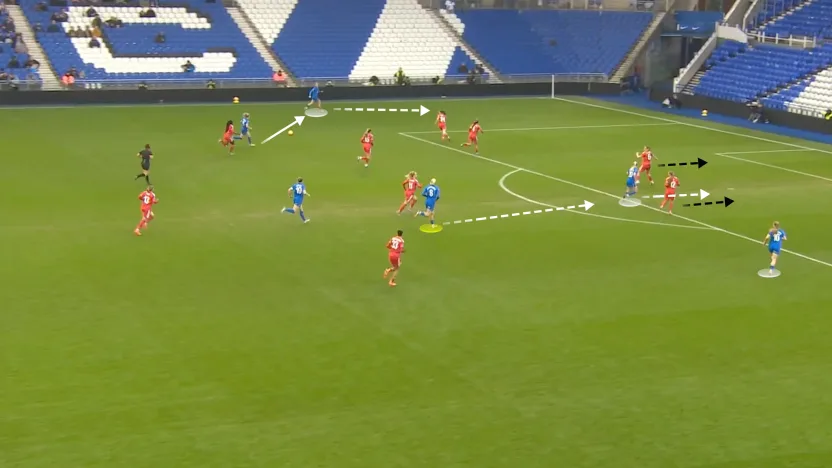
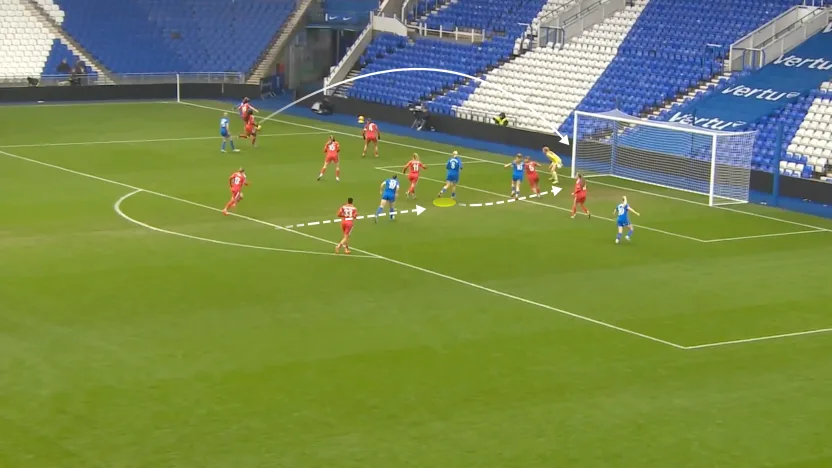
In this example, we can see the movement in action. The ball is played wide, and Leidhammar begins her run forward, reading the situation ahead of her. The centre-forward's movement forces the defensive line back, compressing the space and drawing the defenders' attention.
As a result, rather than making a direct run that her marker can track and follow, Leidhammar drifts. Her opponent, focused on getting goal-side, moves in front of her, and Leidhammar simply lets her go, peeling away behind and finding herself completely unmarked as the cross arrives.
She just takes advantage of the space and nods the ball home. The goal looks incredibly easy at first glance, because it’s all down to subtle but intelligent movement.
Defensive contribution
Leidhammar is not signed to defend, but what she offers without the ball is worth acknowledging. She brings energy to Birmingham’s play, setting the tone for the whole team. She clearly enjoys the battle, throwing herself into defensive situations with an enthusiasm that belies her primary role in the side.
The data tells the story. Her defensive duel win rate of 65.6% is a solid number for an attacking midfielder, suggesting that when she does engage defensively, she does so effectively and at the right moments rather than throwing herself into challenges she cannot win.
This tells us that she is a player who has learned to pick her battles, and it means that when she does engage, she tends to come away with the ball.
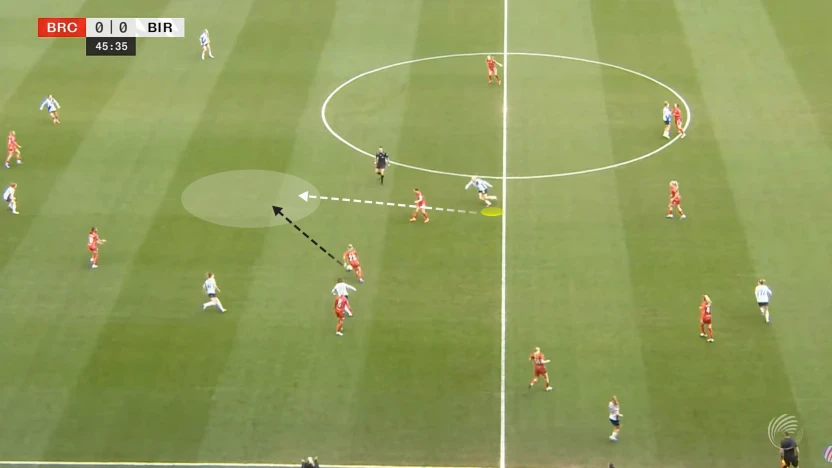
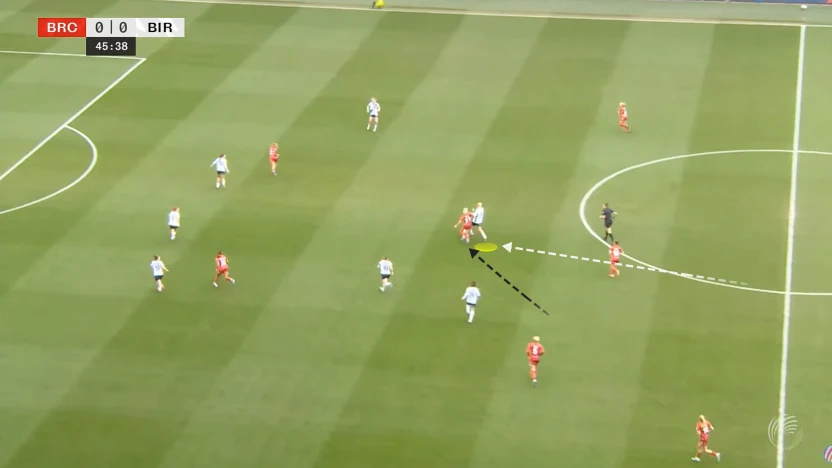
In this instance, the opponent has the ball and is carrying forward with purpose. Leidhammar, tracking back from an advanced position, has no right to get anywhere near the challenge.
She sprints back, closes the gap at a pace that catches her opponent completely off guard, and rather than going for the tackle, uses her strength to get her body between the opponent and the ball. She then holds her ground and turns away with possession, transitioning her team into attack.
This is the kind of action that teammates feed off, and opponents find deeply frustrating. It encapsulates everything about her defensive contribution. She is willing to do the hard graft for her team.

Additionally, we have to acknowledge the tenacity she brings to her defensive work. Here, we see a short burst of acceleration that takes her opponent by surprise, closing down quickly and blocking a shot from the edge of the area.
A player who defends with real intensity and enjoyment sets a standard for the rest of the squad and signals to opponents that there is no easy way through. Since joining the Blues in January, the young Swede has brought her own dimension and intensity to Amy Merricks’ side as they push for promotion.
Conclusion
Wilma Leidhammar is not a straightforward player to analyse, and that is precisely what makes her so interesting.
Technically, she is a very refined player. Her touch in tight spaces is excellent. Plus, she has a wonderful ability to receive under pressure. She is not a player who needs time on the ball to be effective. She takes one touch where others take three, and the game moves faster around her as a result.
What stands out above everything else, though, is the mentality. She’s a player who competes in every phase. That attitude, combined with her technical quality and intelligence, makes her a genuinely difficult proposition for any BWSL 2 defence to contain.
Despite only being in English football for a matter of months, she has already become a key component of Birmingham City’s attack. With the Blues on course for promotion, seeing Wilma Leidhammar in the top-flight looks like a very exciting prospect.
Word credit: Beth Limb