When Arsenal beat Birmingham City 4-1 at the Pirelli Stadium in 2011, the FA WSL Cup competition, as it was known then, was brand new. This was the inaugural Barclays Women’s Super League season, and the league cup was one of three trophies on offer in a season full of firsts.
Fifteen years on, the women’s game looks almost unrecognisable. The BWSL is one of the most-watched women's leagues in the world, its domestic cup finals are broadcast live to millions, and the clubs competing for its silverware are forces in European football. The Subway Women’s League Cup has continued to grow, through multiple name changes and format tweaks.
Interestingly, for all that has changed, one thing about this competition has stayed very stubbornly the same. Across the fourteen previous editions, only three clubs have ever lifted the trophy. Arsenal, Chelsea, and Manchester City have shared it among themselves every single time, with seven, three, and four titles, respectively.
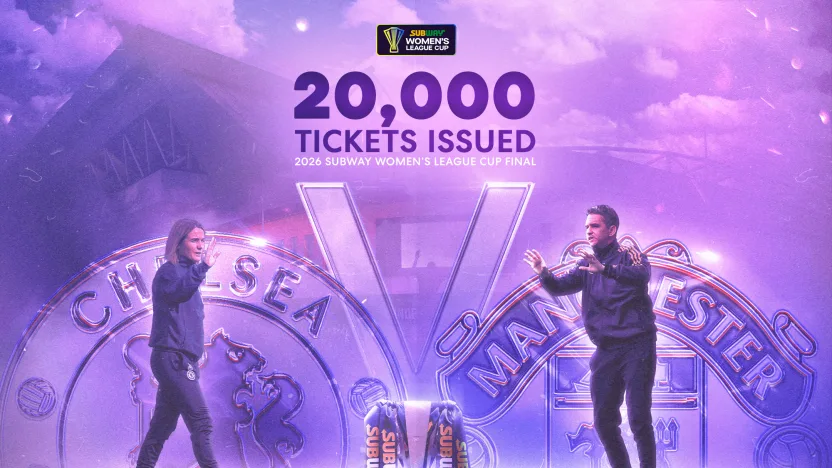
That statistic faces its most serious challenge yet, though. On Sunday, Manchester United, in their first-ever Women's League Cup final, take on holders Chelsea with the chance to write their name into the competition's history.
In this piece, we will trace the history of the Women's League Cup, dissect the most pivotal moments, and the shifts in power that have defined the competition across the last fifteen years.
The Arsenal Years
For the first half-decade of the competition's existence, the Women's League Cup belonged to Arsenal. They won the first three editions in succession (4-1 over Birmingham City in 2011, 1-0 over Birmingham again in 2012, and 2-0 over Lincoln Ladies in 2013).
During this period, the Gunners had a firm grip on the wider women's game in England; they were winning domestic cups and league titles for fun, with names like Ellen White, Kim Little, Rachel Yankey and Jordan Nobbs consistently making the difference on those big occasions.

Arsenal’s dominance in the competition was briefly broken in 2014, when Manchester City, in their first-ever final, won 1-0 at Adams Park in Wycombe. There was a certain irony in the fact that Steph Houghton, who had only just left Arsenal to join City that summer, was the one lifting the trophy against her former club.
The Gunners responded the only way they knew how. Back in 2015, Nobbs scored twice against a ten-player Notts County side before substitute Chioma Ubogagu wrapped it up in stoppage time, ensuring Arsenal reclaimed the title once again.
Signs of change were afoot, though. Manchester City and Chelsea were becoming forces to be reckoned with in English football, making the fight for the League Cup a lot more interesting.
Swing of the Pendulum
If the first half of the competition's history belonged to Arsenal, the six editions that followed offered us a far more diverse story. Between 2016 and 2022, the trophy changed hands between City, Arsenal and Chelsea, with all three clubs vying to become the dominant force in English women’s football.
City won it again in 2016, beating Birmingham 1-0 after extra time at their own Academy Stadium. Arsenal hit back in 2017/18, with Vivianne Miedema's first-half strike enough to edge out City in a very hard-fought final. However, City responded the following year, beating Arsenal on penalties in 2018/19 to claim their third title.
The battle between City and Arsenal didn’t quite continue as in 2020; a new name came into the competition’s story when Chelsea made their first-ever League Cup final appearance and won it in quite dramatic fashion.
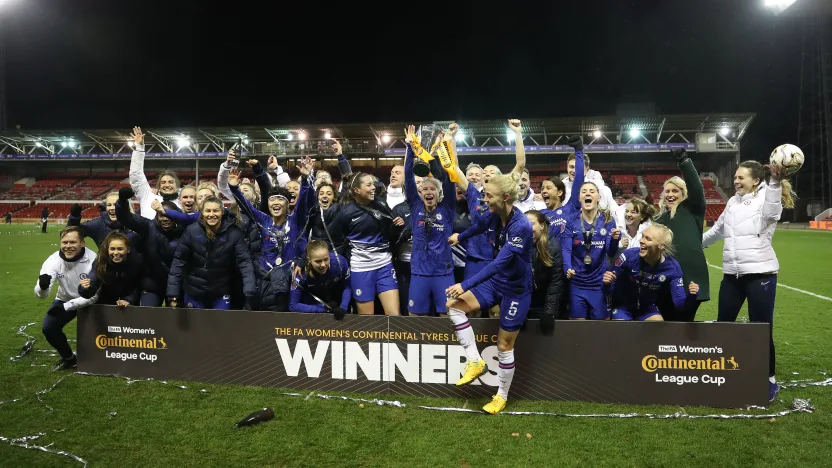
Beth England opened the scoring in the eighth minute, Leah Williamson equalised for Arsenal in the 85th, and with extra time looming, Maren Mjelde found England in the box to score in stoppage time, sealing the victory for Emma Hayes’ side. After 9 years, the League Cup finally had a new name on the trophy.
Chelsea retained it emphatically the following year, beating Bristol City 6-0 in a final played entirely behind closed doors due to the pandemic.
For Chelsea, the League Cup was just one piece of a broader domestic dominance. Conversely, for Arsenal and City, beating the Blues to it felt like the ultimate statement, proof that Chelsea's grip on English women's football was not as tight as the table suggested.
The Euros Effect
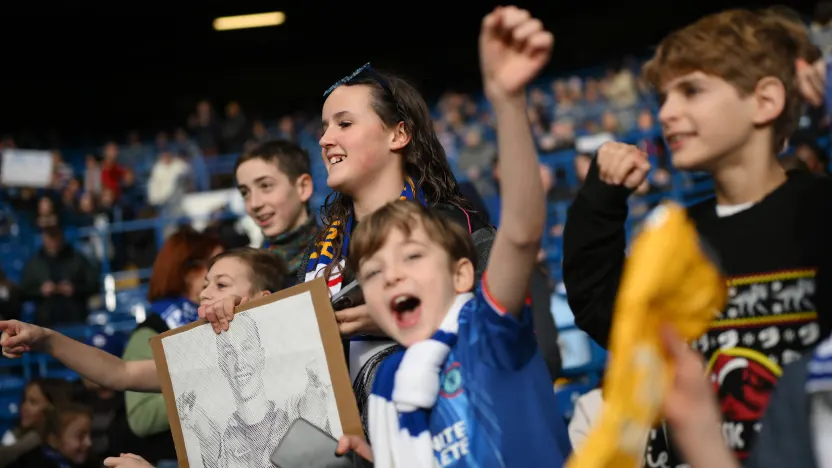
The numbers tell the story better than anything else. The first-ever final attracted just over 2000 spectators, and in 2018, Arsenal beat Manchester City in front of a similar number. Five years later, 19,010 went to Selhurst Park to watch the Gunners claim victory over Chelsea. The following year, over 20,000 packed into Molineux to watch Arsenal retain their title.
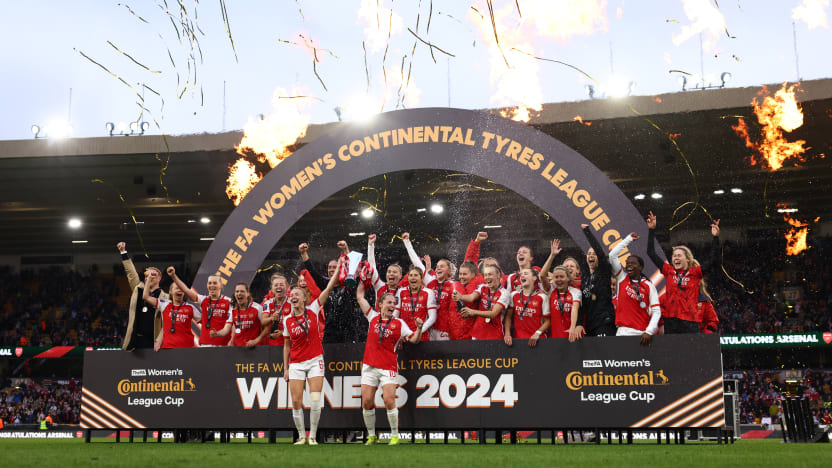
The Euros effect was real, and the Subway League Cup final has seen this as much as anywhere else in the women's game.
On the pitch, Arsenal reasserted themselves once again in the post-Euros era, winning back-to-back finals in 2023 and 2024. Chelsea were going nowhere, though and finally reclaimed it the following year, with Sonia Bompastor's side beating Manchester City 2-1 at Pride Park.
This was the first trophy of her tenure, and the launchpad for a domestic treble and an invincible season. This League Cup victory was particularly sweet for the Blues, who had made six consecutive final appearances and lost the previous three.
Sunday's Final at Ashton Gate
Looking ahead, Sunday brings the possibility of adding a new name to the exclusive Subway League Cup winners' club.
Manchester United arrive at Ashton Gate on Sunday as first-time finalists, but that label undersells what Marc Skinner's side have become. In recent years, they have tasted success, winning the FA Cup in 2024 and reaching the Champions League quarter-finals in their debut appearance in the competition earlier this year. Manchester United are a team firmly capable of upsetting the status quo.
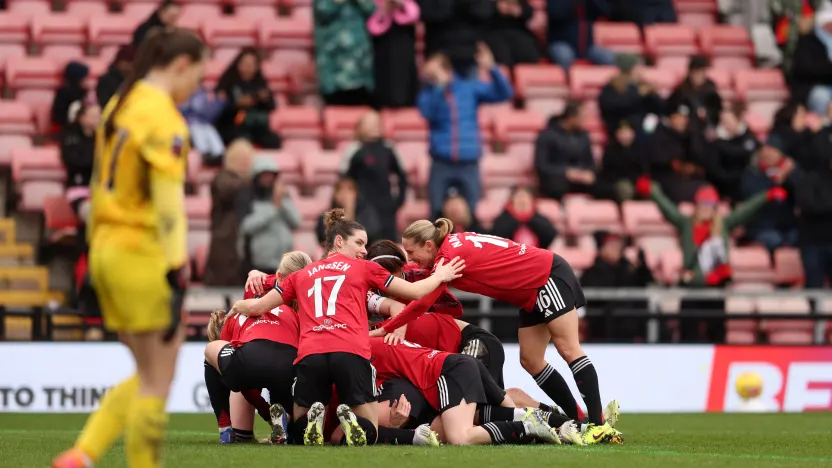
Reaching the final is a big turning point for Skinner’s side, having fallen at the semi-final stage three times previously, they finally ended that curse, beating Arsenal 1-0 at Meadow Park, with Elisabeth Terland netting the winner. It was a performance that embodied everything Skinner has built; they were well-organised, resilient, and clinical in front of goal.
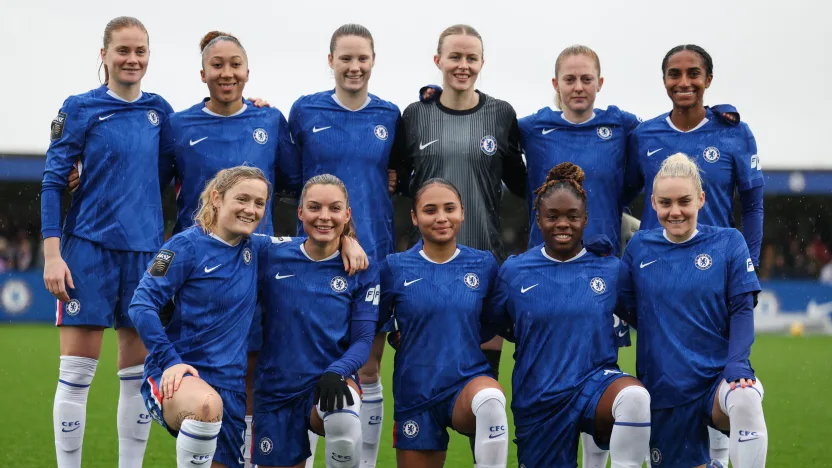
Chelsea, meanwhile, arrive as holders and have appeared in seven consecutive finals. Sonia Bompastor's side have endured a more difficult league campaign than in previous seasons, with Manchester City looking set to end their six-year grip on the BWSL title. Cup football is a different story, though, and the Blues have the opportunity to use all their experience and prove they are still ruthless when it counts.
From 2000 people in Burton to 20,000 at Molineux, the stature of the Subway League Cup has grown with the women’s game in England. The final has become one of the most anticipated events of the season.
Whatever happens at Ashton Gate, it will mark the end of an era in many ways. The competition is set for an overhaul next season, with a Swiss-style league phase introduced, and the BWSL clubs competing in the Champions League won’t participate.
The revamped format will open the door for new teams to claim the title of a competition that, in its current form, has been the exclusive preserve of English women’s football’s elite. So, whoever lifts the trophy on Sunday will be the last winner of the League Cup as we know it.
For Manchester United, that adds yet another layer of significance to an already historic occasion, while for Chelsea, it’s a chance to add to a legacy built across the last fifteen years.
Either way, the Subay Women's League Cup bows out of its current era in fitting fashion, with everything still to play for.