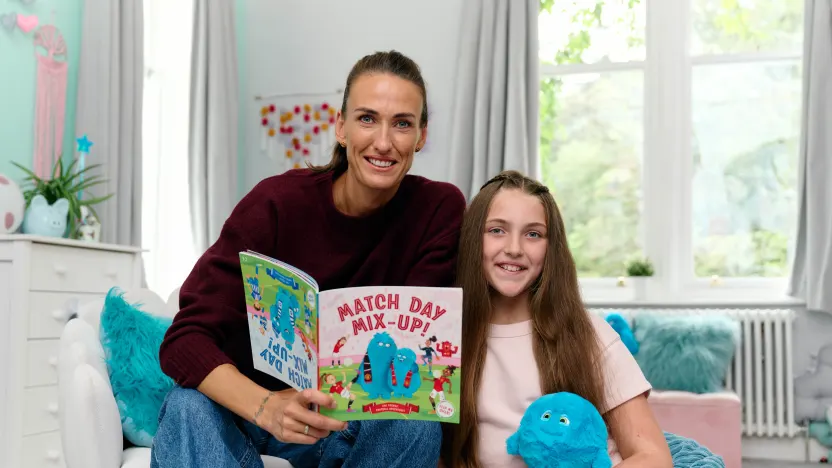
Writing for very young readers means reaching children at the exact moment they are starting to form their own interests and loyalties, and deciding for themselves what they love. For David, that made a children's series built around the BWSL a natural fit, even if it came with rather more real-world research than dragons ever demanded.
We spoke to him about bringing Manchester United and Brighton & Hove Albion to life on the page, why every club in the league gets its turn, and what he hopes a child does the moment they finish the last chapter.
What inspired you to get involved in a children's book series centred around Barclays Women's Super League clubs?
What appealed to me was the chance to help introduce very young children to women’s football at the point when they’re just starting to form their own interests and loyalties. There’s something rather special about being part of that first encounter with a sport, especially when the series is designed to take readers across the whole league rather than simply focus on the biggest clubs. As a children’s writer, that felt like a very natural fit.
Football fandom often starts at a young age. What did you want children to feel when reading these stories?
I wanted them to feel the excitement of matchday, but also that football is somewhere they’re welcome. You don’t need to know all the players, understand every rule or have inherited a club from your parents to enjoy it. The Thing family are discovering these clubs too, so I hope young readers can make those discoveries alongside them. If the young reader finishes the story curious to know more, that feels like a pretty good result.
The first book features Manchester United and Brighton & Hove Albion. How did you go about bringing those clubs and their communities to life in a way young readers can connect with?
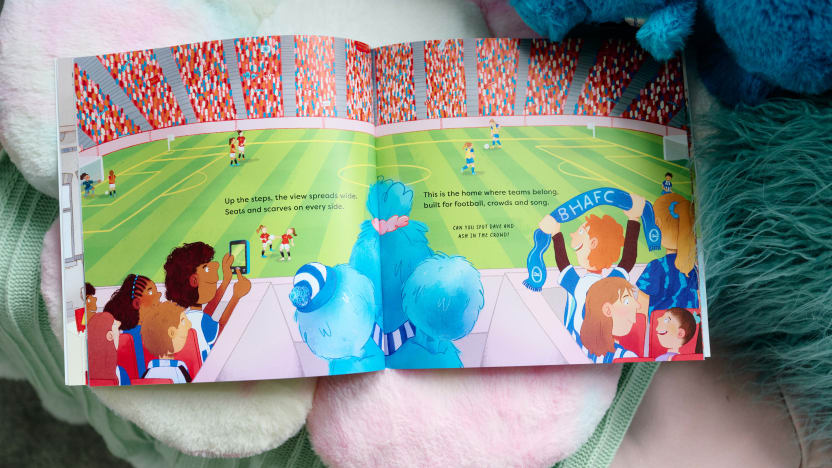
Most of my own books involve superheroes, spies, dragons and other things that are wonderfully forgiving when it comes to factual accuracy, so this series has involved rather more real-world research than I’m used to! I’ve tried to find the details that make each club distinctive, whether that’s its history, traditions, stadium or community, and then build those naturally into the story rather than simply presenting children with a list of facts. The aim is that they come away feeling they’ve actually visited that club and got to know something about it.
What role do you think storytelling can play in helping children discover football and become lifelong fans?
A football match is already a great story. It has two sides who want different things, two halves, twists and reversals, heroes, setbacks and - very accommodatingly for a story - an ending nobody knows in advance. For a child who doesn’t yet know much about the game, a story can give them characters to care about and a way into that excitement. Hopefully, once they’ve experienced that on the page, they’ll want to experience the real thing too.
One of the exciting things about this series is that every WSL club will be represented. Why was that important to you as a writer?
One of the aims of the series is to help young or new fans discover the league and perhaps find the club that feels like theirs, so it seemed only fair that every WSL club should have its turn. Each club has its own history and community, and part of the fun has been finding what makes each one distinctive. I also like that support in the women’s game can sometimes feel a little less tribal than in the men’s game. Rivalries still matter, of course, but there seems to be more room for young fans simply to enjoy the league and its players before deciding where their loyalties lie.
If a child finishes this first book inspired to follow women's football more closely, what would you hope they do next?
I’d hope they pester their parents to take them to a match! One of the lovely things about the WSL is that matchdays can feel very welcoming and accessible for families, especially for children discovering football for the first time. There’s only so much a book can do with the noise, colour and excitement of being there in person, so if the story makes a child want to experience that for real, I think it’s done its job.