It is the evening of Wednesday, 2 July 2025. The sun begins to set behind St Jakob Park in Basel, Switzerland, as over 34,000 spectators inside await the opening match of the UEFA Women’s Euro.
As kick-off nears, individuals take their seats, congregating in a sea of red and white to welcome their team as the national anthem rings out around the stadium. On the pitch, the cameras zoom in on captain Lia Wälti, who is proudly singing along with tears in her eyes. The emotion on her face says it all: we did it. Years of thinking about and planning for this moment, and it’s finally here.
However, another overwhelming feeling is perhaps even more present than that of gratitude and pride. The national team, the broader football landscape and the nation of Switzerland itself knows that hosting a tournament can have a major impact on ‘future-proofing’ the success of women’s football for the host nation. You only need to look at England as the previous tournament hosts and the burgeoning success of the Lionesses and the Barclays Women’s Super League post-Euro 2022 to see the impact that tournament success can have.
Of course, there were sceptics, whose voices were perhaps felt even louder than those of the locals who hoped, dreamed and believed. Switzerland is not a traditional footballing nation, they had never progressed beyond the group stage of a Euro tournament before and, prior to Euro 2025, only four Swiss international players were playing in arguably the most prosperous league in women’s football, the Barclays Women’s Super League. Did they really have what it takes?
The answer, to put it simply, was a resounding yes. Following three tightly-fought group stage matches, Switzerland made history when they reached their first quarter-final. Though this match ended in a 2-0 defeat to Spain, it was clear that the events of the tournament had transformed how top-flight English recruitment departments evaluated Swiss talent. Now, two-years on, there are nine Swiss international players who call the Barclays Women’s Super League home. The "Swiss Pipeline" is officially open, and it took a historic home tournament to forge it.
Breaking Barriers
Had Switzerland not hosted Euro 2025, this mass migration to England may not have materialised so rapidly. For years, players in the Swiss Women’s Super League (AWSL) and Swiss talent across continental Europe faced a visibility barrier. English scouting departments frequently categorised the Swiss talent pool as technically proficient, yet unproven against top-tier physicality and high-tempo opposition week-in and week-out. Hosting Euro 2025 changed the game overnight.
Rather than relying on brief international windows, BWSL analysts received four matches of high-stakes, maximum-pressure tournament data. When Switzerland ground through Group A and stood toe-to-toe with world-class opposition in the knockout rounds, their players were both representing their country and completing a live, high-volume audition. The tournament proved that Swiss technical discipline, honed under host-nation pressure, translated directly to the demands of the BWSL.
Standing on the Shoulders of Trailblazers
This modern wave of Swiss transfers was not built overnight. Before Euro 2025 provided the ultimate showcase, a handful of pioneers quietly laid the groundwork in England. National team captain Lia Wälti established herself as an indispensable midfield anchor at Arsenal and makes her return to the league at Brighton & Hove Albion this season, while Noëlle Maritz built a formidable reputation across stints at Arsenal and Aston Villa. Alongside Chelsea alumnus Ramona Bachmann and ex-Tottenham defender Luana Bühler, these veterans dismantled the myth that Swiss players couldn't adapt to the league's high-tempo physical standard. Their years of tactical consistency paved the way for English clubs to trust Swiss talent, proving that the nation produces elite competitors ready to lead at the highest level. The post-Euro influx includes six key additions who used the tournament to solidify high-profile moves to England across the last two summers:
The Pre-Tournament Buzz
Though the majority of Swiss international player transfers were secured post-tournament, the anticipation around Euro 2025 led to a couple of top-flight English teams keeping tabs on Swiss players in the months leading up to the tournament. The first of these to become public knowledge was the signing of Swiss goalkeeper Livia Peng by Chelsea, winners of the Barclays Women’s Super League in the 2024/25 season. The signing became official on 10 June 2025, three weeks ahead of the tournament starting, with the league champions citing Peng’s crucial role in helping her previous club, Werder Bremen, reach the German Women’s Cup Final for the first time in their history as a key factor in their decision to sign.
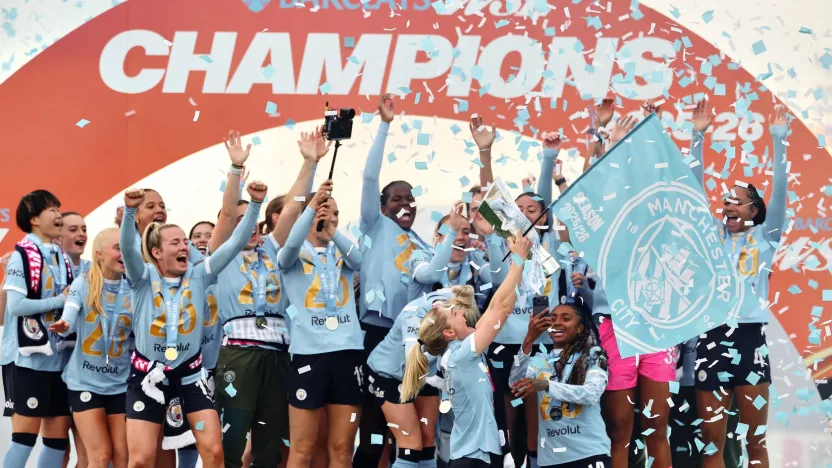
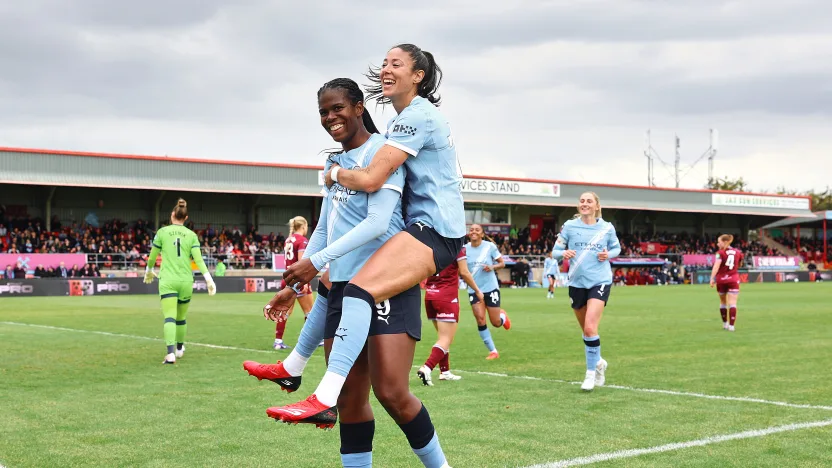
Less than two weeks later, on 22 June, the current Women’s Super League champions Manchester City announced the signing of Iman Beney from Swiss Super League side BSC Young Boys. The club cited Beney’s strong comeback from her anterior cruciate ligament injury, which ruled her out of the 2023 World Cup, as a key factor in her signing, with the young attacker scoring nine goals across 22 appearances in the Swiss Super League during the 2024/25 season. Her versatility was also a key selling point, with Manchester City noting that the right winger can be deployed as a right wing-back or right back where desired. The latter position is where she has found herself positioned most frequently so far with Manchester City, providing defensive stability but also an attacking flair which contributed to their league success and has made Beney the seventh highest valued player under 21 in the Women’s Super League.
The Euros Effect
Following the historic run of Switzerland in the Euros tournament, a number of English clubs pinpointed players who had been crucial to that success. The first to become public knowledge was the signing of Leila Wandeler from Olympique Lyonnais to Women’s Super League club West Ham United, which was made official on 23 August 2025. At just 19 years old, Wandeler earned her senior debut just one month before the Euros in a friendly against Czechia, where she provided an assist for her team’s final goal in a 4-1 victory. During the tournament, her speed and precision on the wing led to an assist in the 90th minute to secure a 2-0 victory against Iceland in Switzerland’s second group stage match of the tournament. Her ability to perform on the most prestigious of stages led to the Irons pushing for a prompt signature post-tournament.
Another player who positively shone throughout the Euros tournament was Géraldine Reuteler. The then-26-year-old attacking midfielder from Eintracht Frankfurt was awarded Player of the Match in all three of Switzerland’s group-stage games at Euro 2025, with her work ethic, versatility and flair contributing heavily to the team’s historic run to a first Euros quarter-final. Her versatility in particular caught the eye of Women’s Super League giants Arsenal, who had won the Women’s Champions League that previous May. However, transfer complications meant that the signing could not be progressed until the expiry of Reuteler’s contract with Eintracht Frankfurt this summer, and the signing was finally made official on 8 July 2026.
Not Just a One Summer Wonder
The signing of an additional two Swiss players across the January 2026 and summer 2026 transfer windows suggests that Swiss internationals are now becoming one of the go-to ‘pools’ for recruitment to the Women’s Super League. Indeed, the signing of Swiss forward Aurélie Csillag by Liverpool on 19 January 2026 showed evidence of a scouting team keeping tabs on Swiss players in their league environment post-Euros prior to making a move. Csillag shone in the Frauen Bundesliga at the beginning of the 2025/26 season, with the young attacker contributing three goals and an assist for Freiburg across 12 matches played, in which she started just three of these matches. This led Liverpool to push for her signature in the winter window.
Later on, West Ham United opted to add to their increasing tally of Swiss players by bringing in Nadine Riesen from Eintracht Frankfurt. Riesen scored Switzerland’s first goal of the Euros tournament against Norway on 2 July and followed this up with a stalwart display of defensive strength across the three group stage matches. She then returned to Frankfurt, where she had a stellar season, with her defensive aptitude across a total of 22 matches played contributing to a third-place finish for the club. Though her performances in the Euros may have cast a spotlight, it was undoubtedly the continuity of this into league action which persuaded the east London club that Riesen was the correct choice.
A Permanent Pipeline
The legacy of Euro 2025 will highlight tournament attendance, grassroots investment, and venue upgrades across Switzerland, but the legacy shines outside of the host country too. By demanding the footballing world take a closer look at a host nation battling to a historic quarter-final finish, Switzerland erased any lingering doubts about their players' ability to excel in English football. The pipeline is open, and both the BWSL and the Swiss national team are benefiting from the momentum.