The Barclays WSL has grown significantly in recent years, attracting internationally recognised players, bigger transfer fees and major commercial partnerships. England’s Lionesses have helped raise the profile of women’s football in the country. The BWSL’s growth is also reflected in the players it attracts, the money clubs are spending and its growing international presence.
The arrival of two-time Ballon d’Or winner Alexia Putellas from Barcelona to London City Lionesses is a major example of that international appeal. When a player of her standing joins an English club, it shows international players the league's standards through the calibre of its players. Her arrival raises a bigger question: is the BWSL becoming a destination for the world’s best players?
Building a league players want to join
The move towards full professionalism in 2018/19 marked an important turning point for women’s football in England. Clubs faced higher standards around player contact time, coaching, academies and facilities, alongside stricter financial and licensing requirements. These changes aimed to create a more professional environment where players could train and compete at the highest level.
That’s important when attracting talent from abroad. Wages and playing opportunities matter, but coaching quality, medical support and training facilities can also influence a player's decision to move.
The BWSL’s growing international presence offers one way to measure this development. The number of players from outside England rose from 88 in 2017/18 to 228 in 2025/26. The figure currently stands at 216 in 2026/27, although the season is still underway.
The league has also expanded, growing from 10 teams in 2017/18 to 12 in 2019/20 and 14 in 2026/27. That expansion means more squad places are available, which should be considered when comparing the figures. Even so, the increase points to a much stronger international presence than the league had several years ago.
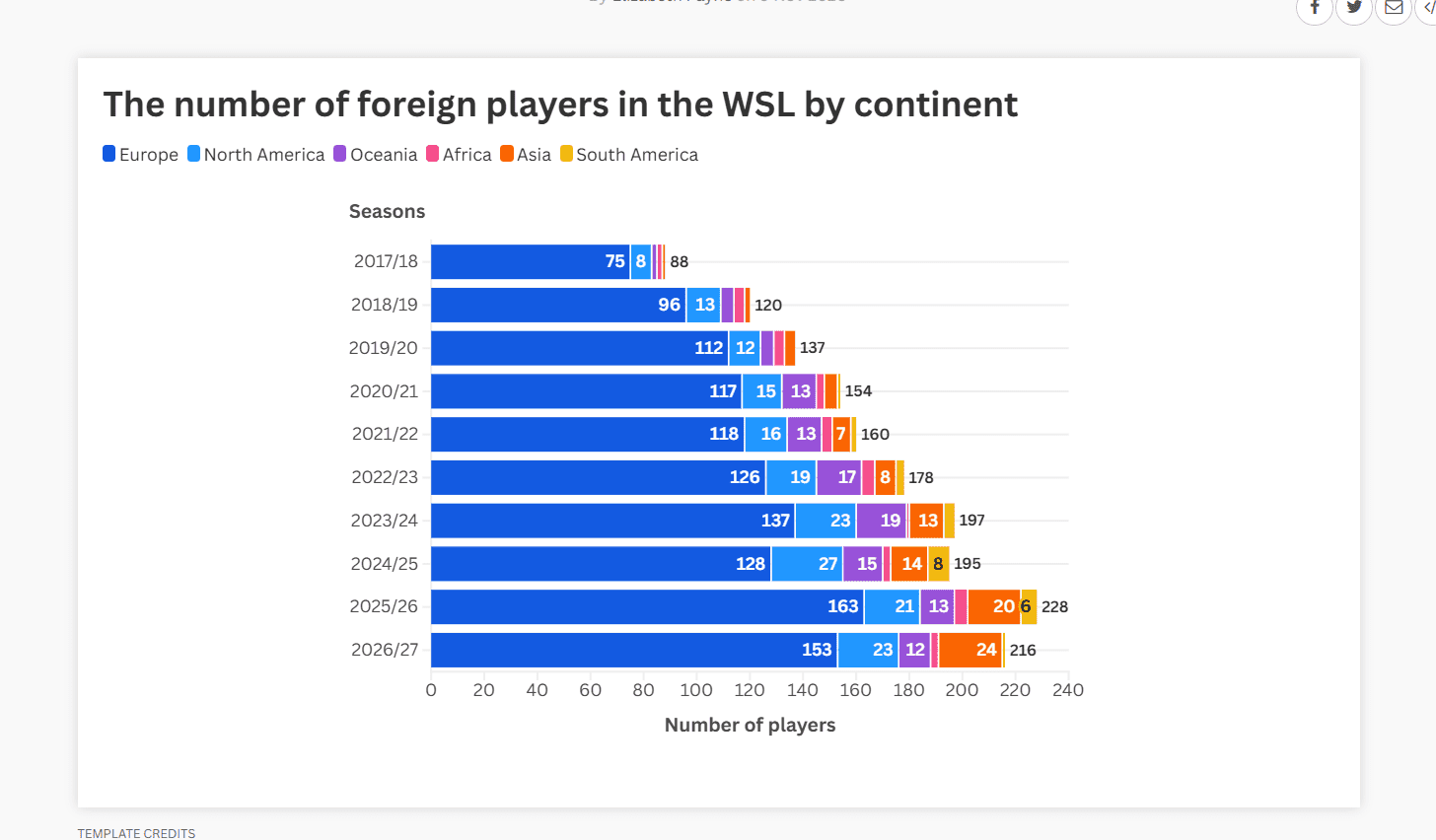
Note: England players are excluded. Players from Wales, Scotland and Northern Ireland are included in the figures.
Big-money moves
The transfer market also signals the BWSL’s changing ambitions. Chelsea set a reported world-record fee in 2020 when they signed Pernille Harder for more than £250,000. In 2025, Chelsea signed Naomi Girma from the United States in a deal widely reported to be worth around $1.1 million, setting a new benchmark for transfer fees in the women’s game. Arsenal then signed Olivia Smith from Liverpool for a reported fee exceeding £1 million, another landmark deal for the BWSL.
Grace Geyoro also joined London City Lionesses that year in a deal widely reported to be worth around £1.4 million. All three deals took place in the summer of 2025. While Girma and Geyoro arrived from abroad, Smith’s move showed that clubs are also prepared to spend significant sums on players already in the BWSL.
Estimated transfer spending rose from around £300,000 in 2022/23 to £1 million in 2023/24, £1.78 million in 2024/25 and £3.3 million in 2025/26. So far in 2026/27, spending is estimated at £6.1 million, nearly double the previous season’s figure, with the January window still to come.
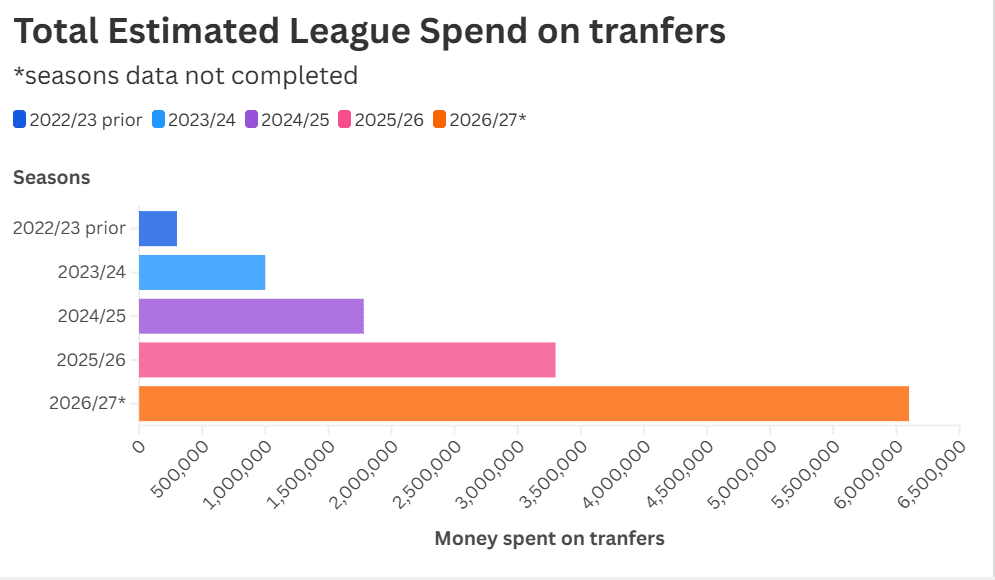
The overall trend suggests that clubs are increasingly willing to invest in recruitment. Big-name signings can also bring more attention to clubs and help raise the league’s profile abroad, potentially making the WSL more attractive to other players considering a move.
Follow the money
The BWSL’s growth is also reflected in its finances. The figures show that combined club revenue rose from £48 million in 2022/23 to £65 million in 2023/24 and £90 million in 2024/25. Deloitte has also projected that revenue could exceed £100 million in 2025/26. The Lionesses' success at EURO 2022 helped raise the profile of women’s football. Since then, clubs have continued to develop their commercial partnerships and matchday experience. Matchday revenue rose by 73% to £12 million in 2023/24, while commercial revenue grew by 53%.
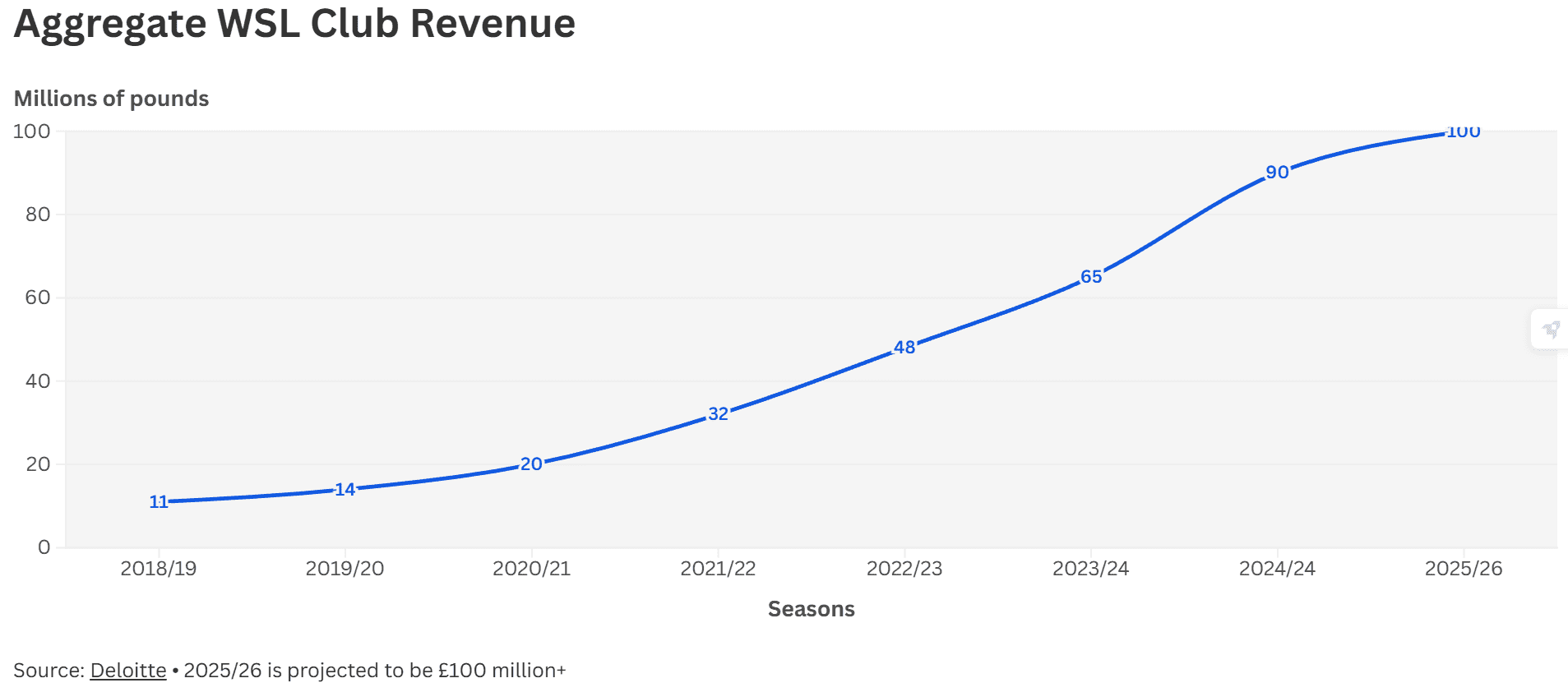
However, the growth has not been shared equally. Chelsea, Arsenal, Manchester United and Manchester City accounted for around 71% of total WSL club revenue in 2024/25. The figures show both the scale of the league’s financial growth and how concentrated that growth remains among its biggest clubs.
TV Broadcast has also become a bigger part of the WSL’s finances. The domestic rights agreement covering 2025/26 to 2029/30 was reported to be worth £65 million over five years and involves Sky Sports and the BBC. The agreement increases the league’s broadcast exposure, with more top-flight matches available to watch.
The £65 million figure refers to the reported value of the rights deal itself, while wider investment, including production costs, takes the overall figure above £100 million. The new deal is also reported to be worth around £13 million a season, compared with an estimated £7-£8 million under the previous agreement.
The WSL’s international broadcast reach continues to grow, with its new four-year deal with CBS Sports in the United States reportedly increasing the value of its media rights fourfold. The league is also broadcast across countries including Australia, Mexico, Spain and territories across Southeast Asia.
Sponsorship deals are another part of the picture. Nike is a league partner and ball supplier, providing boots and gloves for players without their own endorsement deals. Mercedes-Benz UK is the presenting partner for the promotion and relegation play-offs. Airbnb is also an accommodation partner. These agreements increase the WSL’s commercial reach, although their long-term value will depend on whether greater exposure translates into regular viewership, stronger attendances and sustainable revenue.
The WSL has seen international recruitment increase, transfer fees rise, and club revenues grow. But the league has also expanded, while its finances remain concentrated among a handful of clubs, and other leagues are spending heavily to attract top talent. How far these changes have made England a destination for the world’s best players remains an open question.