Manchester City midfielder Yui Hasegawa on idolising Ronaldinho, the coaches who shaped her game and what Japan must change to produce more players.
“Forme,footballisreallyaboutusingmybraintothinkabouthowweexecuteourtacticsandplaytogether.”Yui Hasegawa
I don't remember exactly when I first kicked a ball, but my older brother played, so that’s how I started. I’ve been playing since I was little, maybe around three years old. It feels like before I knew it, I just found myself playing football. When I was young, I watched male soccer players more than female ones. I liked Brazilian players such as Ronaldinho, and back then I played with the aim of becoming like them.
When I grew up, there weren't many opportunities, and there wasn’t really the environment for girls to play football exclusively with other girls. It was often said in Japan that many girls quit playing football around junior high school because they weren’t able to play at school. However, players who joined club teams tended to keep playing, so I joined a club team starting in junior high. Playing alongside such good players, including some who were around six years older than me, really contributed to my growth.
In terms of the differences between football in Japan and England, I think it’s the same in Japan as it is here, in terms of teaching youngsters to just have fun playing in the early days. We also did a lot of training to develop intricate dribbling skills in Japan. Once I joined the club team during junior high, I think I started to learn a lot about tactics as well.
In my case, it’s the coaches who shaped my footballing philosophy. The people who have been my coaches over the years are incredibly important to me. It wasn't just about skill; they also taught me things like positioning and using my brain. I think the playing style I have now is thanks to the coaches I’ve met along the way.
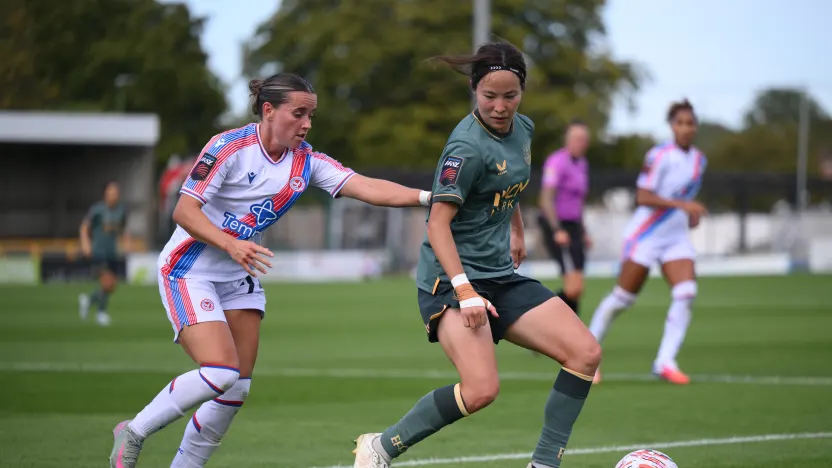
I place great importance on how we play as a team. Of course that includes individual aspects like trying to break through the opposition, but for me football is really about using my brain to think about how we execute our tactics and play together. If I had to pick [a favourite way of playing], I’d say I prefer the defensive side of the game.
I feel that football isn’t quite as deeply rooted in the culture in Japan as it is in Europe or England. Because of that, I believe that players like us, especially those playing overseas, have a crucial role to play in the future of Japanese women's football. I feel a real sense of responsibility to deliver performances and results that inspire children to want to follow in our footsteps.
Considering the characteristics of Japanese players, they really play a vital role when there are one or two of them in a team. That’s a positive, but on the other hand if a team were to be made up entirely of Japanese players, all 11 of them, I feel something would be missing. In that sense, possessing qualities that foreign players lack and being able to show them in my play is likely the reason I'm succeeding here. My position has changed from when I played in Japan, so things are a bit different in that sense, but in terms of what I do – or the essence of the kind of football I want to play – I haven't drastically altered my original playing style. Of course, in terms of physicality, I still feel that I need to get stronger.
If I could change one thing about football for girls back home, it would be to increase the number of girls' teams at the elementary school level, because the number of players would grow significantly. I also think that the environment and adding more places for them to play are the most important things. One message for young girls back home would be, first, I hope they can enjoy football and find players they want to be like. Then, while imagining the ideal version of themselves that they want to become, I want them to have fun, put in lots of effort, and do their best.
Football is something I love doing. If I didn’t have this… I don’t know what I would do... It’s just something I truly enjoy.