How quickly the game changes. Even with the 2025/26 BWSL campaign still fresh in our minds, things are evolving rapidly. A mix of ambitious teams, a busy transfer window, an expanding league, and newly promoted and relegated squads looking to make the most of their new environments are all coming together to create a very different landscape for the season ahead.
Everyone’s looking to make adjustments, but some are more drastic than others. Here are the five whose shifts in approach, recruitment, and strategy look most likely to have the biggest impact in the Barclays Women’s Super League.
A Costly Window Ahead: Chelsea’s Look to Close the Gaps and Reclaim Control
While Chelsea were far from having a disastrous season this year, they’re also not the dominant force they have been for much of BWSL history. The reason is simple: there are gaps in their squad that have widened in recent years, leaving them vulnerable to exploitation from attacking talents like Shaw, Russo and Hanson.
So where are their biggest weaknesses? First and foremost, the departure of the legendary Millie Bright will further expose their backline. With options at left-back such as Naomi Girma and Veerle Buurman, their greater priority this transfer window is likely to be at right-back and in midfield, particularly if they can bring in someone who has strong chemistry with the likes of Keira Walsh.
Just look at how Arsenal and Manchester City have previously utilised those areas, with Chelsea often stretched in those spaces, allowing explosive players to find opportunities when the right channel is open and midfield cover arrives too late to close it down.
Up front will also need rebuilding. Sam Kerr has confirmed her departure in the summer, alongside striker Catarina Macario and midfielder Guro Reiten. This means a full overhaul across both wings, along with the need for a star player to try and fill the Kerr-shaped absence in their offence. Shaw was the first-choice target, naturally, but with her signing a long-term deal at Manchester City, it will be a scramble to secure the best of the rest.
We expect a club with Chelsea’s ambition to go after both problems at once in what will almost certainly be a big, busy and very expensive transfer window, all with the aim of getting back to their winning ways next season.

From Defensive Fortress to Attacking Force: Charlton Set for Transformation in the Transfer Window
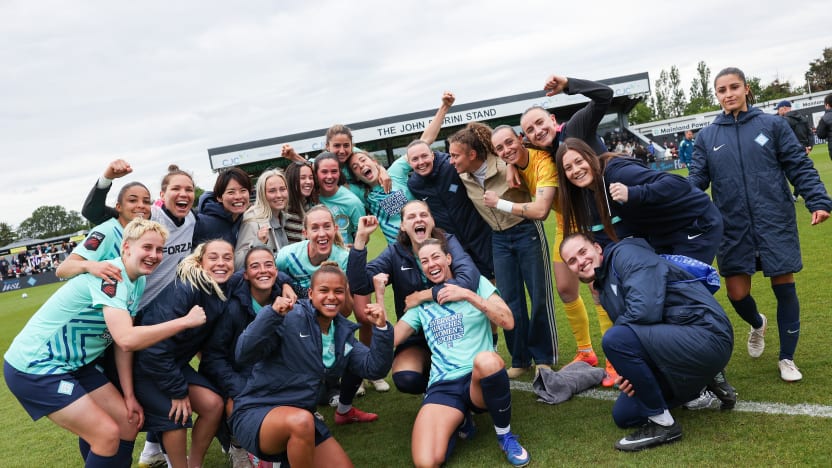
With the best defensive record in BWSL2 and just 21 goals conceded all season, Charlton finally secured a place in the top division of English women’s football for the first time in their history. Fittingly, it was the culmination of a defensive tour de force, spearheaded by goalkeeper Sophie Whitehouse, whose heroics between the posts saw her save four Leicester penalties and guide Charlton to victory in a sizzling play-off finale.
But the gap between the BWSL and BWSL2 is enormous. Although Charlton came out on top against Leicester in their play-off showdown, they produced just one shot on target in 120 plus minutes. Coupled with a goal difference of only +10 across their 2025/26 season, the lowest of any top five side, it paints a clear picture. Charlton needs more firepower.
And if history repeats itself, they’ll get it. Last year saw London City Lionesses recruit 16 new players. We’re not expecting that but if Charlton signed even a fraction of that number, it could transform them quickly. With most of those additions likely to prioritise pace, forward pressing and creativity to complement their strong defensive base, this could become a very different and potentially far more dangerous team.
We’re anticipating a three-way focus. They’ll likely look to bring in another versatile attacking midfielder to link play, alongside wide forwards and, if available, a direct, high-output striker capable of applying sustained pressure. But their budget is a problem. Realistically, even with promotion, Charlton are unlikely to have the budget to compete with the top teams for the most explosive talents.
Still, with the right picks this approach could still elevate the likes of Katie Lockwood, Amalie Thestrup and Lucy Fitzgerald, creating a far more aggressive unit. Karen Hills was smart to prioritise defensive stability this season and has far exceeded expectations in the role. She now looks well placed to push the team in the more proactive direction they will need to thrive in the top flight.

The Shape-Shifting Seagulls: Brighton’s Tactical Versatility Shaking Up the BWSL
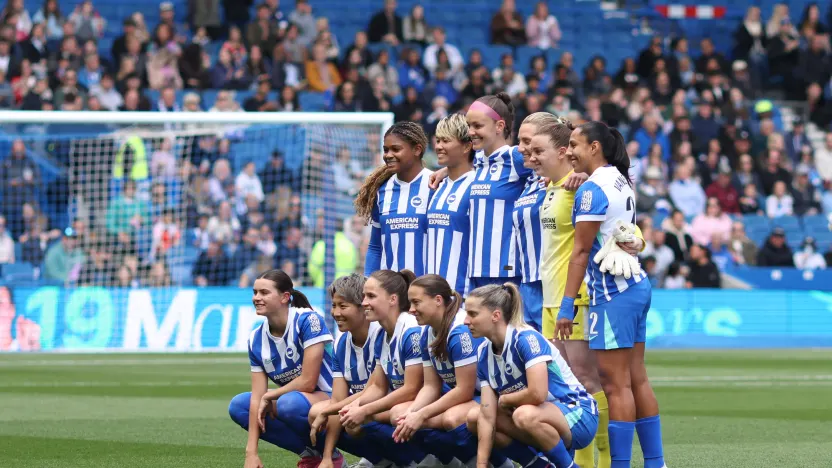
Brighton have quietly become one of the most dangerous teams in the Barclays Women’s Super League. Having taken eight points from their last five games, they finished the season with the best goal difference outside the top four. The Seagulls have also beaten Arsenal, Liverpool and Manchester City in the last two months, the latter of whom they will meet again in the FA Women’s Cup final following a stellar knockout campaign. That makes them bona fide giant killers.
Much like Charlton, much of this success has been built on a sterling defensive record, with Brighton conceding just 28 goals in the BWSL. They have been highly effective at shutting down opponents, with Manuela Vanegas and Charlize Rule providing cover out wide while Moeka Minami and Caitlin Hayes keep things tight through the centre. And they’ve proven adaptable, their typical 4-4-2 formation is swiftly shifted into a back five when required and has proven a nightmare for even the league’s best attacking sides to break down.
This formational versatility has also proven effective in giving the likes of Kiko Seike, Jelena Čanković and Madison Haley the space they need to create chances. It seems to be the sheer number of options they have which makes them such a tricky opponent
Now, it hasn’t all been plain sailing. Fran Kirby has struggled with multiple health issues, and the loss of Nikita Parris this season has been a significant blow they have not quite been able to replace. In terms of strategy going forward, we expect them to continue refining this multi-faceted attacking approach that they feel they have been perfecting under Dario Vidošić, while adding greater technical variety in their build-up play if they can bring in the right players over the summer.
Patience Runs Out for Passmoor as Leicester’s Drop Forces Comprehensive Changes in the Foxes’ Den
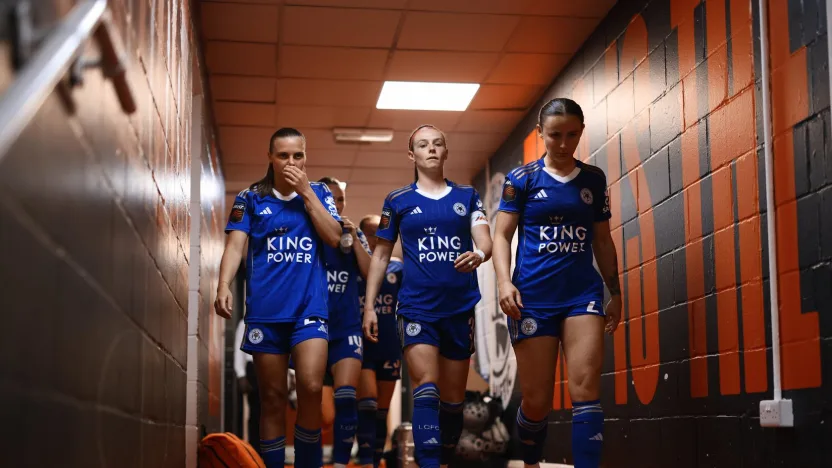
It’s all over for Leicester in the Barclays Super League. Everything they tried to do to steady their ship has ultimately failed. That includes a shift towards high-pressing football and backing experienced players like Alisha Lehmann and Hannah Cain. All sensible ideas on paper.
But the bottom line is that, after a brutal 13-match losing streak and a penalty play-off defeat to Charlton, they have finally slipped into relegation after clinging on for so many months.
The buck has to stop with Rick Passmoor. A steady start to his interim position as head coach started well enough for a three-year contract, but after a baker’s dozen of losses, his future with the club looks shaky. The man himself has said he’ll sit down with Director of Women's and Girls' Football for Leicester City Women Lee Billiard to see what the future holds in the coming weeks. So, it’s possible we’ll see a change there very soon.
But either way, Leicester will likely need to rebuild much of their team. Nothing is confirmed, but we know it will be very difficult for them to keep their top talents, even with the financial boost of the World Sevens series.
So what does the future of the Foxes look like? Funnily enough, it seems their best course of action may be to take a leaf out of the team that just vanquished them from the BWSL in Charlton. They did not have the money or star power to take the league by storm, and instead focused on building a solid defensive foundation to grind out enough points.
In other words, we could see Leicester be rebuilt from the back, potentially with a back three or back five rotation system as they find their feet. Who knows, in a twist of fate, adopting some of Charlton’s methods could even see them join or replace the Addicks next season.
Tiki-Taka Tactics: The Ambitious Rise of London City Lionesses
London City Lionesses roared into the top flight with 16 new signings, including a £1.4 million world-record deal for Paris Saint-Germain midfielder Grace Geyoro. It was a bold statement, as the only independent team in the BWSL, showing they are here to stay.
Even bolder, they replaced Jocelyn Prêcheur with Éder Maestre at the end of last year, to the shock of fans, despite a respectable return of five wins from their opening 11 games. For the London City Lionesses’ hierarchy, however, “good” is not good enough. Their ambition is clear: they want the scalps of the top teams in English football.
They haven’t quite managed that yet, although victories over Brighton and Aston Villa, along with a handful of draws, saw them finish a respectable sixth. And while they have looked chaotic at times, we expect the vertical tiki-taka style introduced by their new manager to evolve further next season.
This is a team that wants to move fast and break things, and they are willing to take defensive risks to do so. As a result, we expect a strong push to recruit players who can operate alongside 20-year-old sensation Freya Godfrey, cutting inside and driving the team toward victory. It is a high-risk approach: committing so many players to an aggressive press can leave them exposed defensively, and it often does.
But you don’t become top contenders for the BWSL title by being meek. In truth, with the right signings and the confidence they’ve shown, this ambitious Spanish style of football could pay off in a big way. It wouldn’t be a surprise to see the London City Lionesses claw their way into the top four next season.